

Heat Resistance Explained: Which Worktops Can Actually Handle Hot Pans?
April 12, 2026
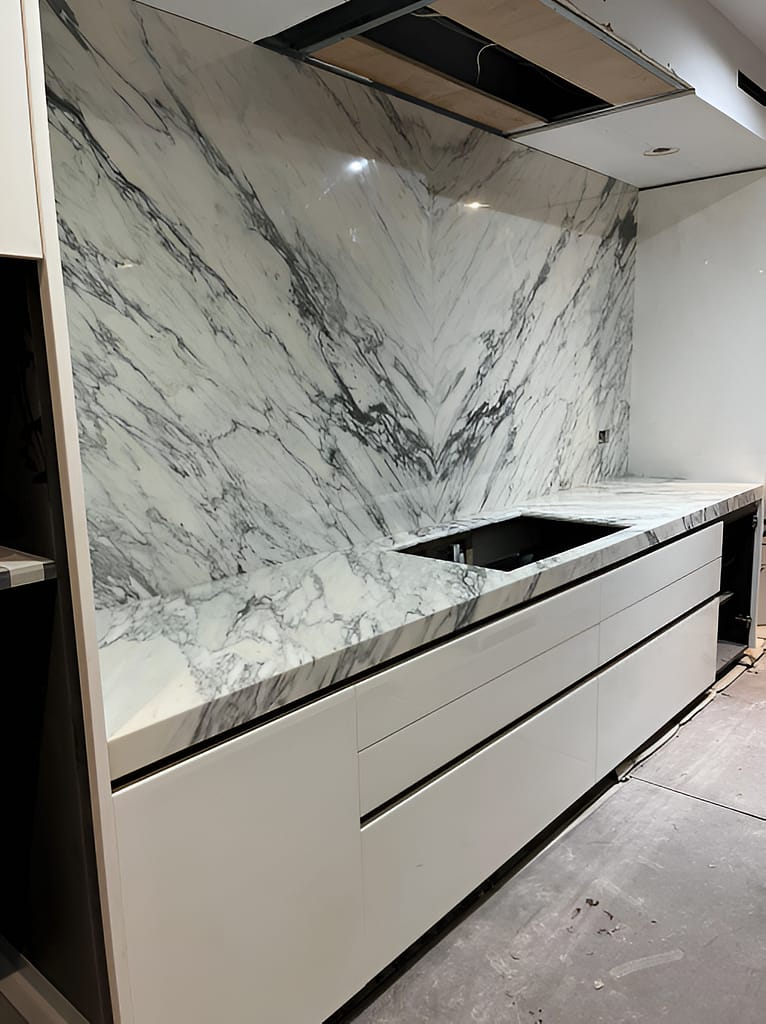
Picture this: you’ve just boiled the kettle, lifted a heavy cast-iron pan off the hob, and set it down on your brand-new worktop — only to discover a white ring, a scorch mark, or worse, a crack staring back at you. It’s a scenario that plays out in London kitchens every single day, and it’s entirely avoidable with the right worktop choice.
Heat damage is one of the most common — and most preventable — causes of worktop failure that our fitters at SY STONE encounter across London. Whether you’re renovating a terrace in Hackney, upgrading a kitchen in South Kensington, or fitting out a rental property in Harrow, understanding your worktop’s heat tolerance before installation can save you hundreds of pounds in repairs.
In this guide, we break down exactly which kitchen worktops can handle hot pans, which ones are secretly vulnerable, and what London homeowners need to know before choosing their material. The short answer: granite offers the best natural heat resistance, sintered stone (Dekton) leads overall, and quartz — despite its reputation — is actually more heat-sensitive than most people realise.
Let’s get into the detail.
⚡ Quick Answer: Which Worktops Handle Hot Pans?
- Granite — Excellent heat resistance; handles brief contact with hot pans safely.
- Sintered Stone (Dekton) — Best overall; virtually heatproof up to 300°C+.
- Quartzite — Good heat resistance as a natural stone.
- Quartz (engineered) — Moderate; NOT fully heatproof — resin binders can discolour above 150°C.
- Marble — Poor; heat can cause discolouration and structural stress.
- Laminate & Wood — Very poor; always use a trivet.
SY STONE’s recommendation for busy London kitchens: Granite for natural stone lovers; Dekton/Sintered Stone for maximum heat resilience.
Kitchen Worktop Heat Resistance: Full Comparison Table
Use this table as your at-a-glance reference before choosing a material for your London kitchen.
| Worktop Material | Heat Resistance Level | Safe Temp (°C) | Risk if Exposed | Good for London Kitchens? |
|---|---|---|---|---|
| Granite | ⭐⭐⭐⭐⭐ Excellent | Up to 250°C+ | Minimal if unsealed; thermal shock possible with extreme temp changes | ✅ Highly recommended |
| Sintered Stone / Dekton | ⭐⭐⭐⭐⭐ Outstanding | 300°C+ | Negligible — designed for direct heat contact | ✅ Best choice for heat |
| Quartzite | ⭐⭐⭐⭐ Very Good | 200°C+ | May crack under sudden extreme temperature changes | ✅ Good option |
| Quartz (engineered) | ⭐⭐⭐ Moderate | ~150°C | Resin binders discolour or warp; voids warranty | ⚠️ With caution + trivets |
| Marble | ⭐⭐ Poor | ~100–150°C | Thermal stress cracks, surface discolouration, resin staining | ⚠️ Not ideal for heavy cooking |
| Laminate | ⭐ Very Poor | ~60–80°C | Melting, bubbling, delamination — permanent damage | ❌ Always use a trivet |
| Solid Wood | ⭐ Very Poor | ~60°C | Scorching, warping, charring — irreversible | ❌ Always use a trivet |
Quartz Worktops & Heat Resistance — The Truth London Homeowners Need to Know
Quartz is, without question, the most popular kitchen worktop material we install across London — from compact flats in Hackney to sprawling open-plan kitchens in Kingston. It’s easy to understand why: it’s beautiful, non-porous, low-maintenance, and available in dozens of finishes from Calacatta white to deep charcoal.
But here’s the truth that surprises many of our clients: quartz is NOT fully heatproof.
Engineered quartz is made from approximately 90–93% crushed natural quartz stone, bound together with polymer resin — typically polyester or epoxy. That resin binder is the weak point. When exposed to sustained heat above approximately 150°C, the resin can:
- Discolour permanently — leaving a yellow or white bleached patch
- Warp or crack — creating a visible raised or sunken area
- Separate from the quartz particles — causing a bubbling or cloudy effect
In our experience fitting quartz worktops across London, the most common culprits are: placing a hot pan straight from the hob, setting down a boiled kettle directly on the surface, and — surprisingly — leaving a slow cooker running on the worktop for extended periods.
Key facts about quartz heat resistance:
- Safe surface temperature: approximately 150°C
- A boiling pan from a gas hob can exceed 200°C on its base
- Damage from heat voids most manufacturer warranties
- Damage is permanent — there is no repair for resin burn
Our recommendation: always use a trivet or silicone mat with quartz worktops, without exception. The material is excellent for London rental properties and family homes where durability and hygiene matter — just never treat it as heatproof. Learn more about our quartz worktop installations across London here.
Granite Worktops & Heat — The Natural Stone That Takes the Heat
If heat resistance is a priority for your London kitchen, granite is our go-to recommendation as a natural stone option. Granite is formed under intense geological heat and pressure — millions of years of it — which gives it a natural ability to handle the kind of heat produced in even the most enthusiastic London kitchen.
Unlike engineered quartz, granite contains no polymer resin binders. It’s 100% natural stone, which means it doesn’t have that heat-vulnerable component. A granite worktop can comfortably handle brief contact with hot pans, baking trays straight from the oven, and kettles without damage.
Key facts about granite heat resistance:
- Withstands temperatures up to 250°C+ in brief contact situations
- No resin to discolour or warp under heat
- Ideal for households that cook with heavy pans, woks, or casserole dishes
- Best practice: still avoid extreme and sudden thermal shock (e.g., placing a frozen item directly next to a very hot area)
One important note: while granite itself is heat-resistant, the sealant applied to the surface is not. Repeated direct heat contact can degrade the sealant over time, making the stone more susceptible to staining. We advise our London clients to reseal their granite worktops approximately every 12–18 months, depending on usage.
In our workshop, we source, fabricate, and install all our granite worktops entirely in-house. Every slab is precision CNC-cut and sealed before leaving our fabrication facility. Explore our granite worktop installation service across London.
Marble Worktops & Hot Pans — Beautiful but Vulnerable
We’ll be completely honest with you about marble — because we believe our London clients deserve the full picture, not a sales pitch. Marble is one of the most beautiful worktop materials available, and we install it regularly across London for statement kitchens, bathroom vanities, and bespoke applications. But it is not a good choice if you frequently place hot items on your worktop.
Marble is a metamorphic rock composed primarily of calcite. Calcite is sensitive to heat, acids, and abrasion. When a hot pan — particularly one above 100°C — is placed on marble, the following can occur:
- Thermal stress: The calcite crystals expand unevenly, which can cause micro-cracks or, in extreme cases, visible fractures
- Discolouration: Heat can cause the resin used in surface filling to yellow or cloud permanently
- Surface dulling: The polished finish can be affected by heat, leaving a matt patch
We advise every marble client in London to treat their worktop as they would a luxury fabric — with care and appropriate protection. Trivets, cooling racks, and silicone mats are non-negotiable with marble.
Key facts about marble heat resistance:
- Safe surface temperature: approximately 100–150°C
- Highly vulnerable to both heat and acid etching (lemons, vinegar, wine)
- Best suited for: low-heat areas, statement islands, bathroom applications
- Not recommended for: households with heavy daily cooking, households with young children
If you love the look of marble but need more practicality, we often recommend marble-effect quartz or quartzite as alternatives for busy London kitchens. See our marble worktop portfolio across London.
Sintered Stone / Dekton — The Premium Heat-Proof Option for London Kitchens
If you want the most heat-resistant worktop available on the market today, sintered stone — most commonly known by the brand name Dekton — is the answer. This is the material we recommend to London clients who cook seriously, run commercial-style kitchens, or simply want complete peace of mind around heat.
Sintered stone is manufactured through a process called ultracompaction — applying extreme heat (around 1,200°C) and pressure to a mixture of raw minerals, replicating in hours what nature takes thousands of years to achieve in natural stone. The result is a material that contains no resin, no polymer, and no organic component whatsoever.
Key facts about sintered stone / Dekton heat resistance:
- Withstands temperatures exceeding 300°C without damage
- Pots, pans, baking trays, and even blow torches can be used directly on the surface
- No discolouration, no cracking, no warping under normal cooking heat
- UV-stable — also ideal for London outdoor kitchen applications
- Non-porous — impervious to staining as well as heat
The trade-off? Sintered stone sits at a higher price point than quartz or granite, and it requires skilled installation — the material can chip at edges if cut or handled incorrectly. Our in-house CNC fabrication facility and certified fitters are fully equipped to work with sintered stone to the precision tolerances it demands.
For London homeowners who wok-cook regularly (a common cooking style in London’s diverse culinary culture), run catering-style kitchens, or want an outdoor worktop that can handle a BBQ nearby, sintered stone is, in our professional opinion, the best investment available.
What About Laminate & Wood Worktops?
We include laminate and solid wood here because many London homeowners are upgrading from these materials — and understanding their heat limitations often makes the decision to switch much easier.
Laminate worktops are composed of a printed paper layer bonded to a chipboard or MDF core with a protective plastic coating. They are highly affordable and widely available, but they offer almost no heat resistance. A pan from the hob at 180°C placed on a laminate surface will cause immediate, irreversible damage — bubbling, melting, or delamination of the surface layer. Even a hot mug can leave a ring mark over time.
Solid wood worktops are similarly vulnerable. Wood chars, scorches, and warps under direct heat contact. A single moment of placing a hot pan without protection can result in a permanent burn mark that is extremely difficult to sand out without affecting the surrounding finish.
If you’re currently working with either of these materials in your London kitchen and are frustrated by heat damage, a stone worktop installation from SY STONE is the long-term solution. Our fitters remove and dispose of old worktops as part of the installation process.
SY STONE Expert Advice: How to Protect Any Worktop from Heat Damage in London Homes
Regardless of which material you choose, our certified fitters recommend a set of simple heat protection habits that will extend the life of your worktop significantly. In our years of installing and inspecting worktops across London — from Harrow to Watford, from Edgware to West London — the same avoidable mistakes come up again and again.
Our top heat protection recommendations:
- Always use a trivet: A quality stainless steel or cast-iron trivet costs under £20 and will save you hundreds in repair or replacement costs. Keep two or three near the hob at all times.
- Never place a kettle directly on quartz or marble: The base of a boiling kettle reaches temperatures that can damage both materials. Use a kettle stand or silicone mat.
- Use silicone mats for slow cookers and air fryers: These appliances generate sustained low-level heat from the base over several hours — enough to cause cumulative damage to quartz and marble.
- Don’t place hot baking trays directly from the oven: Even granite benefits from a cooling rack — it prevents any risk of sealant degradation and is simply good practice.
- Avoid sudden temperature extremes: Moving from extreme cold to extreme heat can cause thermal shock even in granite. Don’t place a frozen item next to a just-removed hot pan on the same slab.
At SY STONE, every installation we complete in London includes aftercare advice tailored to your specific material. We don’t just fit your worktop and leave — we walk you through how to keep it looking its best for years to come. It’s part of our commitment to quality that our London clients have come to rely on.
Heat-Resistant Worktop Installation in London — Trusted by Homeowners Across the City
At SY STONE, we’re a London-based kitchen worktop fabricator and installation specialist — not a national chain with a local postcode. Our workshop is based in London, our fitters work exclusively across London, and our understanding of what London homeowners need from their worktops is built from real experience in real London homes.
We’ve installed heat-resistant granite, quartz, marble, and sintered stone worktops in properties across the full breadth of the city — from family homes in Harrow and Edgware, to rental conversions in Hackney, to premium residential projects in South Kensington and West London, to commercial kitchen upgrades in Kingston and Watford.
Every project begins with a free onsite templating and measurement service. Our fitters visit your London property, assess the kitchen layout, discuss your cooking habits and lifestyle (including how much heat exposure your worktop will realistically face), and recommend the best material for your specific situation.
From there, everything is handled in-house:
- Digital or physical templating to exact tolerances
- CNC cutting, edge profiling, and sink/hob cut-outs in our London fabrication workshop
- Professional installation by our certified fitters
- Plumbing and electrical reconnection by qualified tradespeople
- Full aftercare advice, including heat protection guidance for your chosen material
All our worktop installations in London come with a workmanship warranty. We stand behind every join, every cut, and every fitting we make. If you’re considering a worktop upgrade in London and heat resistance is one of your priorities, we’d love to hear about your project.
Get your free quote from SY STONE today →
Frequently Asked Questions: Heat-Resistant Worktops in London
1. Which worktop material is most heat resistant?
Sintered stone (such as Dekton) is the most heat-resistant kitchen worktop material currently available, withstanding temperatures above 300°C without damage. Among natural stones, granite offers the best heat resistance, making it our top recommendation for London homeowners who cook frequently with heavy pans or woks.
2. Can you put hot pans directly on a quartz worktop?
No — and this is one of the most important things to know about quartz. While quartz is an excellent worktop in many respects, its polymer resin binders are heat-sensitive and can discolour, warp, or crack when exposed to temperatures above approximately 150°C. Always use a trivet or heatproof mat when placing hot items on quartz. Heat damage is not covered by most manufacturer warranties.
3. Is granite worktop heat resistant enough for London kitchens?
Yes. Granite is one of the best natural stone choices for London kitchens where heat exposure is a concern. As a 100% natural stone with no resin binders, granite can handle brief contact with hot pans, kettles, and baking trays without damage. We recommend resealing your granite worktop every 12–18 months to maintain its stain resistance and surface integrity.
4. What temperature can quartz worktops withstand?
Most engineered quartz worktops are rated to withstand surface temperatures of approximately 150°C before the resin binder begins to degrade. For context, a pan removed from a gas hob can exceed 200°C on its base — well above this threshold. Never place hot items directly on quartz without protection.
5. Does heat damage marble worktops permanently?
Yes, heat damage to marble is typically permanent. Placing a hot pan on marble can cause thermal stress micro-cracks, permanent surface discolouration, and degradation of the polished finish. Unlike some stains that can be polished out, heat damage to marble cannot be reversed without professional intervention — and even then, results vary. Always use trivets and silicone mats on marble worktops.
6. What is the best worktop for a busy family kitchen in London?
For a busy London family kitchen where heat resistance, durability, hygiene, and low maintenance are all priorities, we recommend either granite (best natural stone option) or sintered stone such as Dekton (best overall). Quartz is also excellent for family kitchens provided you use trivets consistently. Our team at SY STONE can assess your specific kitchen and cooking habits during a free onsite visit to give you a personalised recommendation.
7. How do I protect my worktop from heat damage?
Always use a trivet, cooling rack, or silicone heatproof mat when placing anything hot on your worktop — regardless of the material. Keep trivets near the hob, use a kettle stand for quartz and marble surfaces, and place silicone mats under slow cookers and air fryers. Avoid sudden temperature extremes (very hot next to very cold) even on granite. These simple habits will protect any worktop material and prolong its life significantly.
8. Does SY STONE offer heat-resistant worktop installation in London?
Yes. SY STONE specialises in kitchen worktop installation across London, including granite, quartz, marble, and sintered stone (Dekton). We offer free onsite templating and measurement, in-house CNC fabrication, professional installation by certified fitters, and a workmanship warranty on all installations. We serve clients across London including Harrow, Edgware, Kingston, Watford, Hackney, South Kensington, and West London. Contact us on 07401644531 or at info@systone.co.uk to arrange your free survey.
9. Are Dekton worktops worth it for London homes?
For London homeowners who cook frequently, entertain regularly, or want an outdoor kitchen worktop, Dekton (sintered stone) is absolutely worth the premium investment. It is the only worktop material that can genuinely claim to be heatproof under normal cooking conditions, and it is also UV-stable, non-porous, and scratch-resistant. The higher upfront cost is offset by the material’s exceptional longevity and near-zero maintenance requirements.
10. What worktop should I choose if I cook with a wok?
Wok cooking involves very high temperatures — a seasoned wok on a gas flame can reach surface temperatures of 300°C or more. If you cook with a wok regularly in your London kitchen, we strongly recommend sintered stone (Dekton) or granite as your worktop material. Both can handle the incidental heat exposure of wok cooking without damage. Quartz, marble, laminate, and wood should be avoided in wok-cooking kitchens, or protected with a dedicated heatproof station near the hob.
Ready to Choose the Right Heat-Resistant Worktop for Your London Kitchen?
Understanding heat resistance is one of the most practically important factors in choosing a kitchen worktop — and it’s one that’s frequently misunderstood, particularly when it comes to quartz. To summarise: sintered stone leads for heat resistance, granite is the best natural stone option, quartz requires care and protection, and marble and laminate should always be used with trivets without exception.
At SY STONE, we’ve spent years helping London homeowners make informed worktop decisions that they’re still happy with years after installation. We’re not here to sell you the most expensive slab — we’re here to fit the right worktop for your home, your cooking style, and your lifestyle.
We offer a free onsite visit, templating, and written quote across London. Whether you’re in Harrow, Kingston, Edgware, West London, or anywhere across the city, our team can come to you at a time that suits — including evenings and weekends.
📞 Call us: 07401644531
📧 Email: info@systone.co.uk
🌐 Request your free quote online →